
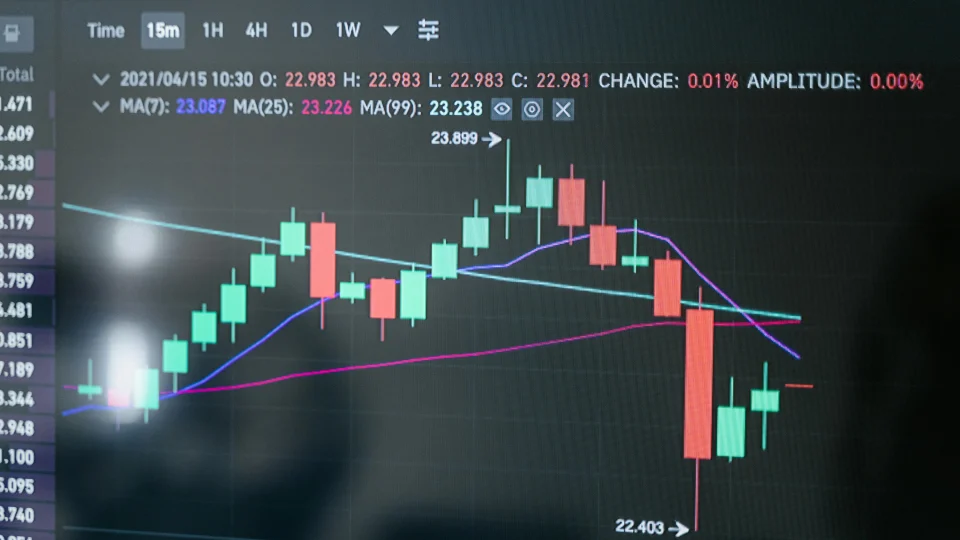
Analyzing the Deepening Crypto Market Downturn
What factors are driving the cryptocurrency market’s rapid valuation loss, and how might they influence investor strategies in the coming weeks? The cryptocurrency market experienced a significant downturn on November 18, 2025, with Bitcoin (BTC) breaking below the $90,000 support level during Asian trading hours. This decline, marking a 6% drop for BTC on the day and over 28% in the past month, has rippled across major assets, leading to widespread liquidations and heightened bearish sentiment. The global market capitalization now stands at $3.08 trillion, reflecting a loss of more than $1.20 trillion over the past month and an additional $160 billion in the last 24 hours alone. The Crypto Fear & Greed Index has plunged to 11, signaling extreme fear among investors and underscoring the market’s vulnerability to further corrections.
Key Price Movements and Historical Patterns
Bitcoin’s tumble to around $89,000 has tested critical support levels, with analysts noting similarities to historical bull market peak patterns. If this trend persists, BTC could potentially decline to its realized price of approximately $55,000, based on past cycles where long-term holders (LTH) and large whales offload positions amid weakening macroeconomic signals.
- Ethereum (ETH) has fallen 16% over the past week, reaching a five-month low of $2,948, amplifying the sector-wide pressure.
- XRP traded at $2.13, down more than 5% in 24 hours, with a daily range between $2.12 and $2.29.
- Other altcoins, including Binance Coin (BNB), Solana (SOL), Dogecoin (DOGE), and Cardano (ADA), declined 5-9%, while trending assets like Zcash (ZEC) and Telcoin (TEL) saw steeper drops of 11% and 12%, respectively.
These movements align with reduced buying support at dips, driven by diminishing expectations for a Federal Reserve rate cut in December. Despite the sell-off, selective accumulation persists; for instance, El Salvador’s government acquired 1,090 BTC valued at $101 million, viewing the dip as an opportunity. Gemini co-founder Cameron Winklevoss echoed this sentiment, stating, “This is the last time you’ll ever be able to buy Bitcoin below $90K.” The broader implications suggest a potential stabilization if support holds, but ongoing whale sales could exacerbate volatility, particularly as institutional inflows wane.
Liquidation Surge and Its Market Impact
Over $1 billion in liquidations occurred across BTC, ETH, XRP, and other altcoins in the last 24 hours, affecting more than 180,000 traders. Data indicates a disproportionate impact on long positions, with $720 million liquidated compared to $280 million in shorts, highlighting leveraged optimism turning to forced selling.
- The largest single liquidation was a $96.51 million BTCUSD order on the Hyperliquid platform.
- Most affected assets included BTC, ETH, SOL, XRP, ZEC, DOGE, BNB, ADA, and Litecoin (LTC), reflecting broad exposure in derivatives markets.
This liquidation wave has intensified the market cap contraction from $3.24 trillion to $3.08 trillion, erasing $160 billion in value. Historically, such events have led to short-term capitulation but can pave the way for recoveries if sentiment shifts, though current extreme fear levels (Index at 11) point to prolonged caution. The imbalance in long vs. short liquidations implies over-leveraged bullish bets, potentially delaying a rebound until deleveraging completes.
Institutional Flows and ETF Developments
Spot Bitcoin and Ethereum exchange-traded funds (ETFs) continued to record outflows, signaling waning institutional interest amid the crash. On November 17, Bitcoin ETFs saw a net outflow of $254.6 million, with BlackRock’s iShares Bitcoin Trust (IBIT) and Grayscale Bitcoin Mini Trust experiencing $145.6 million and $34.5 million in exits, respectively. Ethereum ETFs faced $182.7 million in net outflows—their fifth consecutive day—led by BlackRock’s ETHA ($109 million) and Fidelity’s FETH ($3 million). However, some dip-buying emerged, as Grayscale’s ETHE and ETH recorded inflows of $2.5 million and $10.8 million, respectively, following ETH’s 39% drop from its all-time high. CoinShares data further reveals outflows from funds tracking BTC, ETH, XRP, and SOL, despite anticipated inflows into new Solana ETFs. Fidelity’s Solana ETF (FSOL) is set to launch on November 18, which could provide a counterbalance if it attracts fresh capital. These trends highlight a divergence: while core assets like BTC and ETH face redemptions, niche products may offer pockets of resilience, potentially influencing allocation strategies in a bearish environment. Overall, the market’s contraction underscores the interplay between macroeconomic uncertainties and leveraged trading risks. As outflows persist and liquidations mount, the path to recovery may hinge on renewed institutional buying or positive policy signals. How might these trends affect your portfolio allocation—would you consider buying the dip in select assets like BTC or ETH at current levels?